I'm entering this contest to refer 20 people to author Candace Salima's Author Training workshop. It sounds amazing. If you're interested, go to her website and make a comment and tell her I referred you. Thanks!
|
Thursday, August 23, 2012
Author Training and Contest


Wednesday, August 15, 2012
Guest Blog: The Health Benefits of Natural Yeast, by Caleb Warnock
Health Benefits of Natural Yeast

Guest blog by Caleb Warnock, author of The Art of Baking with Natural Yeast: Breads, Pancakes, Waffles, Cinnamon Rolls and Muffins and the national bestseller Forgotten Skills of Self-Sufficiency Used by the Mormon Pioneers.
© 2012 Caleb Warnock. The contents of this blog post are not in the public domain and may not be used without the express written permission of the author.
Few people realize that the yeast in grocery stores is not a naturally-occurring substance. Laboratory created in 1984, the yeast sold today is so foreign to our digestive systems that some people develop allergies to the yeast itself. This quick-rising yeast appears increasingly connected to the nutritional and digestive disorders that plague so many. Natural yeast flattens the glycemic index, takes away heartburn and acid reflux forever, helps prevent or reverse gluten intolerance and, in some cases, full-blown Celiac’s disease, turns natural phytic acid into an anti-oxidant, controls allergies, and turns flour into a yeast that is both pre-biotic and pro-biotic.
Beyond health benefits, natural yeast is simple to use, costs nothing, tastes wonderful, completely cuts out the need to buy commercial yeast, and drastically reduces the need for baking powder and baking soda. You can easily use it not only to make bread, but also waffles, pancakes, breadsticks, pizza dough, scones, rolls, and even old-fashioned root beer.

Yeast is a single-celled fungus, and the first domesticated living creature in history. Modern science has identified more than 1,000 different varieties of wild yeast. These organisms are so small that hundreds of millions, if not billions, fit into a single teaspoon.
Wild yeast is everywhere -- in the air you breathe, on the bark of trees, on leaves. Ever seen the white film on backyard grapes? That’s wild yeast. The same film can be found of juniper berries. For centuries, both berries have been used as natural “start” for bread yeast.
But not all yeast varieties are the same. For example, the kind of yeast used to make beer is not the same kind of yeast used to make bread. Different natural yeasts have different flavors -- some are strongly sour, some are mildly sour, and some are not sour at all. Natural yeast is sometimes mistakenly referred to as sourdough, but with the right strain of yeast, it doesn’t have to be sour unless that is the flavor you prefer. Some natural yeasts are better are raising bread than others. This is why the best strains of natural yeast has been passed down through generations and communities. Hundreds of people around the nation have gotten free, non-sour natural yeast starts from me.
Until the 19th century, homemade yeast was the only kind there was. In 1857 Louis Pasteur discovered that living organisms -- yeasts -- were responsible for fermentation. Yeast was already an important business, even though no one had understood how it worked. The production of commercial yeast began in France in the 1850s. In the U.S., compressed yeast cakes were introduced to the nation at Philadelphia’s Centennial Exposition in 1876 , which drew 10 million visitors. When America entered World War II, yeast companies developed dry yeast for the military which did not require refrigeration. And then in 1984, rapid-rising yeast was invented in U.S. laboratories.
Today that yeast has all but replaced natural yeast. But not everyone is convinced that the convenience of super-fast yeast outweighs the health benefits of the slow rising process of natural yeast.
A word of caution. If you type “sourdough starter” into Google, you will get hundreds of recipes for starting “sourdough” from commercial yeast. But very little grocery store yeast is now true natural yeast. The best way to get real natural yeast is from someone using a documented strain. The author, Caleb Warnock, mails flakes of natural “sweet” yeast to anyone who requests them at no charge, along with instructions for growing out the yeast. And once you have a start of natural yeast, you can have it for the rest of your life. You can dry it, freeze it, keep it in the fridge, or grow it on your kitchen counter. To get a start of the author’s documented 200-year-old strain of natural yeast, send an email to calebwarnock.yahoo.com.
Here is the link to my blog, and you can click on the cover of the new cookbook to look inside the book. Not to press my luck, but if you order two copies, the shipping is FREE!
CalebWarnock.blogspot.com
Friday, August 10, 2012
Become A Star In Darkspell's Sequel
Want to be written in as a character in Elizabeth Mueller's sequel to Darkspell? Then read on:
Become a book star in Darkspell's sequel!

Become a book star in Darkspell's sequel!

Darkwraith is soon to be in production and Elizabeth Mueller, author of Darkspell, is looking to write you in! If you're interested in auditioning, or looking for a way to surprise a loved one, please click here.
Tuesday, August 7, 2012
Book Hooks
 Over at writingsnippets.com you can listen to our writer's group podcast with one of our favorite author's, M. L. Forman, on book hooks. Learn what a hook is, how to write one, what makes a good/bad hook, where to place hooks in your book, etc.
Also, let us know what you think by making a comment on his interview at writingsnippets.com and we'll enter you in a contest to win one or more of his books or audio books in his Adventurers Wanted series.
Friday, August 3, 2012
Book Bomb: Nightingale, by David Farland
 Aug. 3rd: David Farland is having a book bomb today to celebrate all the awards hfor his book Nightingale has won and I'm participating by blogging about it.
 To participate, please purchase a copy of Nightingale through Amazon today. Those who purchase multiple copies will be rewarded. Remember, you can buy an extra copy for a friend or family member, or to donate to a local library, school, or shelter.
Book Bomb Rewards
If you order 5 copies, you will get a free t-shirt.
If you order 10 copies, you will get a t-shirt and a signed copy
The person who orders the MOST copies will win a T-shirt and a signed, limited edition of Nightingale.
Help us make this book bomb awesome by telling and inviting others. You can do this through facebook, twitter, or your blog.
Right now, Dave is giving away a mini-anthology at nightingalenovel.com, which includes the winning story of the Nightingale short story contest, "Forcible Powerdown" by S. James Nelson, and one of Dave's own short stories "Against Eternity"
Synopsis:
Some people sing at night to drive back the darkness. Others sing to summon it. . . .
Bron Jones was abandoned at birth. Thrown into foster care, he was rejected by one family after another, until he met Olivia, a gifted and devoted high-school teacher who recognized him for what he really was--what her people call a "nightingale."
But Bron isn't ready to learn the truth. There are secrets that have been hidden from mankind for hundreds of thousands of years, secrets that should remain hidden. Some things are too dangerous to know. Bron's secret may be the most dangerous of all.
In his remarkable young adult fantasy debut, David Farland shows why critics have called his work "compelling," "engrossing," "powerful," "profound," and "ultimately life-changing."
Let's help Dave's book bomb "explode" into a huge success!
Monday, July 30, 2012
Book Review: The Poisonwood Bible
 Wow! I hardly have the words to describe how amazing The Poisonwood Bible, by Barbara Kingsolver, is. I first heard about it when I read The Newport Ladie's Book Club. This was the first book the ladies in the book club read, so I decided to read it, too. Well, actually, I listened to it on tape and was immediately drawn in by the voices of the characters and by the setting and story.
The story is about a missionary family in the Congo in the 1960s. Of course I loved the setting since I've set my YA fantasy novel, Kala's Curse, in an imaginary place patterned after the Kongo Kingdom. The writing is exquisite; the metaphors the author uses make the descriptions come alive (and I love reading and writing poetic prose). I'm in awe. I feel like nothing I've been reading or writing lately (and I've read some great books) can even come close to comparing to the masterful writing and depth of this tragic tale, except maybe The Book Thief.
The story is told from the first person POVs of the mother and her four daughters. After a short time I could distinguish the characters' POVs simply by how they spoke, thought, or acted. Yes, the characterization was that good. Each person had their own unique character tag. For instance, one daughter with hemiplegia always began by thinking of a sentence forward and then backward. Another daughter consistently used the wrong words that sounded similar to the right word but had a completely different meaning, eg . . . contractions in place of contraptions.
I can't say enough about this book. I found myself laughing out loud at times and crying later on as I listened to the tale unfold. There aren't many books or movies that can draw me in that emotionally. The Poisonwood Bible was selected for Oprah's Book Club in 1999. The book won the 2000 Boeke Prize and was nominated for the Pulitzer Prize in 1999.
Here's a blurb about the book from Amazon.com:
In 1959, Nathan Price, a fierce, evangelical Baptist, takes his four young daughters, his wife, and his mission to the Belgian Congo -- a place, he is sure, where he can save needy souls. But the seeds they plant bloom in tragic ways within this complex culture. Set against one of the most dramatic political events of the twentieth century -- the Congo's fight for independence from Belgium and its devastating consequences -- here is New York Times-bestselling author Barbara Kingslover's beautiful, heartbreaking, and unforgettable epic that chronicles the disintegration of family and a nation.
Friday, July 27, 2012
Camping with Kids
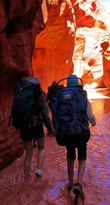
The Pete Suazo Boxing Center, and for August I wrote a story about Kanab, Utah, also named Little Hollywood for all the movies that have been made there. My husband and I spent a weekend in Kanab seeing the sights, talking to business owners, and taking notes and pictures. I love my work even if it pays mostly in meeting interesting people, discovering new places, and learning new things.
Subscribe to:
Posts (Atom)